Our story
The story of the Muirheads
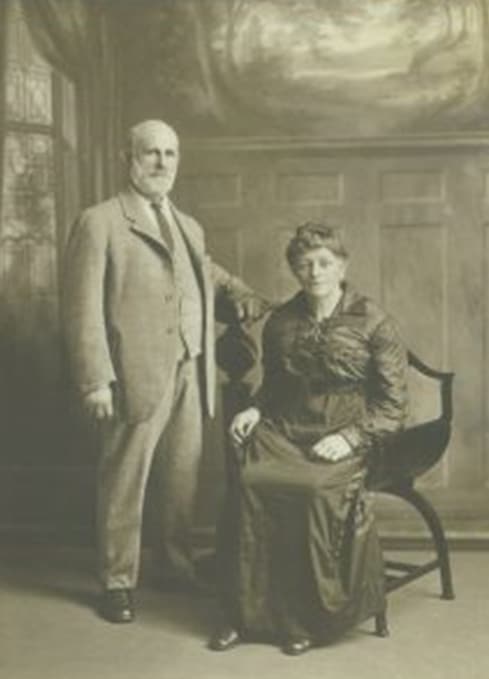
To trace the history of Lovestone Cottages is to retrace the steps of a humble Scottish timber worker, Hamilton Muirhead. Along with his wife and five children, Hamilton made an epic journey across the vast seas to the wild bush of Australia more than 130 years ago.
Born in 1848 in Hamilton, Muirhead grew up in the industrial town of Cross Hill, Ayrshire. His daughter, Annie, was born in 1879 at Meadow Main, part of the Bargany Estate, which included the Lovestone Plantation and a colliery.
The Bargany Estate, owned by Henrietta Dalrymple Hamilton Duchesse de Coigny, saw extensive tree planting between the 1830s and 1860s, including 666 acres at Lovestone Plantation. Muirhead likely gained his timber trade experience here, surrounded by plantations and a timber mill.
By 34, facing unemployment and economic hardship, he saw emigration as a way forward. In 1882, Hamilton and Mary Muirhead arrived in Australia, trading Scotland’s cool climate for Queensland’s heat and humidity. With resilience, he ventured into the region’s forests, where his timber expertise set the stage for his future, drawn to the rich Hoop Pine, Bunya Pine, and Queensland Kauri Pine forests.
Facing unemployment and economic depression, Hamilton and Mary Muirhead emigrated to Australia in 1882, seeking better opportunities. The contrast between their cold homeland and Australia’s hot, humid climate must have been striking. Showing great resilience, Hamilton moved to the forests of south-east Queensland, where his timber expertise helped shape his future, likely drawn to the abundance of Hoop Pine, Bunya Pine, and Queensland Kauri Pine.
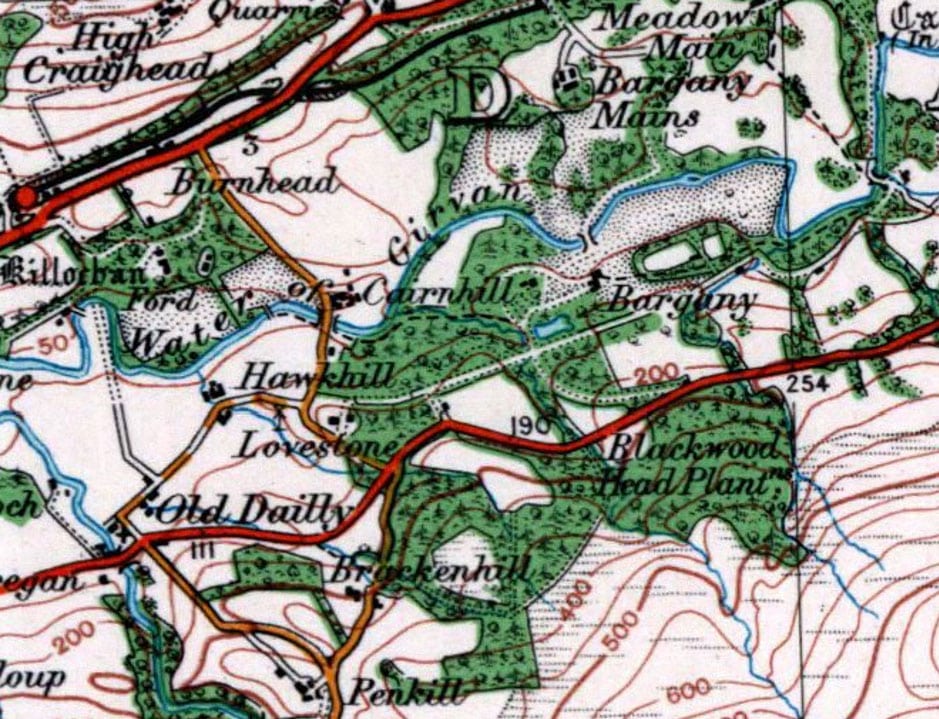
Map of Bargany Estate showing Lovestone Plantation, Meadow Main, and the colliery.
After living briefly in Maroochydore and working at Pettigrew’s Mill, Hamilton Muirhead bought 80 acres in Razorback, now Montville, in the late 1800s. At the time, Montville was a sparsely populated area with dense rainforest. The Muirheads transported their belongings by bullock team and packhorses, clearing the land to grow strawberries, bananas, and gooseberries. Before Hamilton, the Gubbi Gubbi people harvested bunya pines for their nuts.
By the 1900s, Montville had become a popular resort, and the Muirheads, after a brief time in Brisbane, returned in 1906 to purchase land where Lovestone™ Cottages now stands. They raised their children, expanded their orchard, and played a key role in the town’s growth. The fertile hinterland was ideal for fruit farming, and Hamilton’s connection to the land is evident in the remaining tracts of rainforest on the property. His obituary described him as a man who “did not know illness” until shortly before his death, possibly due to his fulfilling life in the bush.
Lovestone Later Years
Over the years, Lovestone™ Cottages has passed through the hands of a small handful of custodians. Each new inhabitant has fallen in love with the property and added their touch. The legacy of all those who have resided here is seen in the many layers of paint on the walls of the main house and the many layers of plantings in the garden. In 1914 the property was named Raleigh Orchard.
In 1992 the first two cottages were built to welcome guests. These were named Forest Glen and Green Acre. In 2003 a third cottage was added and named Avocado with the original two being renamed to Lake and Fern. Known for many years as Montville Grove, the property changed to Lovestone™ Cottages in 2020 to reconnect with the wonderful story of Hamilton Muirhead and his family, and in keeping with this connection the cottages have been renamed to the significant rainforest species on the property.
Today, the atmosphere at Lovestone™ Cottages is much the same as it would have been when the Muirheads lived here. We can imagine his children exploring the bush, the old trees being used to construct the town’s landmark buildings and an intense focus on growing food.
The Gardens of Lovestone Cottages
Stroll through Lovestone™ Cottages’ gardens and immerse yourself in the native rainforest, dense greenery, and fruit-laden orchards. Hidden among them are relics of the past—old fence posts, machinery, a brass sundial, and stained glass on the homestead’s door.
As the garden is rejuvenated, remnants of past gardeners emerge. Beyond the gardens, a 30-metre escarpment offers views into the rainforest.
The fertile volcanic soil has nurtured orchards since the Muirhead family first planted strawberries, bananas, and gooseberries over a century ago. Successive owners have added to the landscape, creating a living history of plantings. The oldest trees—avocado, banana, macadamia, and mango—continue to yield bountiful harvests, alongside mulberries and citrus.
The lush surroundings offer privacy and shelter for wildlife, including bandicoots, possums, brush turkeys, sugar gliders, and even koalas. Native butterflies, bees, and moths thrive among towering trees, ancient ferns, and iconic staghorns.
Birdlife adds bursts of colour, with kookaburras, wompoo pigeons, parrots, and doves often visiting your deck.
The Mother of the Forest
At the heart of the garden stands a majestic 300-year-old White Fig, visible from all cottages. Known as the Mother of the Forest, it symbolises nature’s power and our responsibility to protect it.
Before Montville’s landscape was cleared for fruit-growing, old-growth rainforests thrived with Hoop, Bunya, and Queensland Kauri pines, remnants of a 65-million-year-old ecosystem. Most were felled for timber in the late 1800s.
Recognizing the absence of Bunya pines as a loss, we aim to restore them, ensuring future generations experience these ancient trees once more.
Lovestone House
In 1906, Hamilton Muirhead built Lovestone House in an enviable location on the crest of the famous Montville escarpment. With his wife and six children, he created a vast orchard on the slope behind the house.
Lovestone Cottages wouldn’t be what it is today without the rich history of Muirhead Hamilton and his family. We feel much of his legacy still held within the house which was made from old-growth Hoop Pine. The timber was used in the original floors, ceiling and walls.
Of course, over the years there have been changes and extensions to the original homestead. It wasn’t until the 1950s that the house bathroom, toilet and laundry came into the house.
Set within the historic site are Lovestone’s three cottages – Maple, Rosewood and Quandong. Each one sits effortlessly within the forest and now, within the Lovestone history pages.
Your hosts
Hosts Tamara and Jonathan share a deep passion for the history of Montville and consider themselves custodians of one of its most important properties. As they work to renovate the cottages and repair and rejuvenate the land, they are also dedicated to delivering a memorable experience for every single guest.
When Tamara and Jonathan arrived at the property, then known as Montville Grove, they immediately set about removing weed species to encourage the natural regeneration of native tree species. They are advocates of the Land for Wildlife Program and enjoy working in the natural rainforest and have plans to create walking tracks for guests to enjoy.
Out support
Lovestone Cottages are proud supporters of the Tourism Industry and active members of the following: